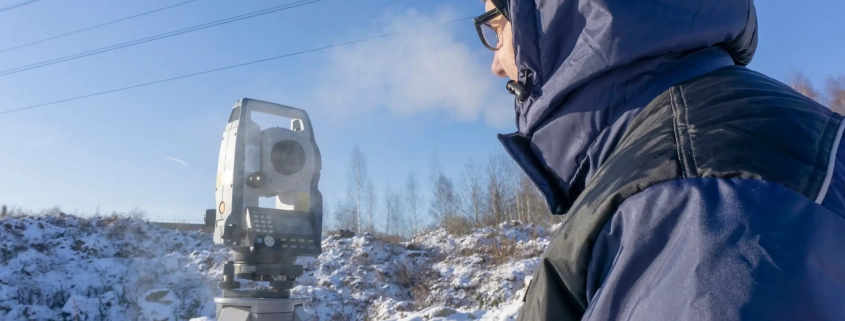
While the thought of surveying property in the midst of winter, with a blanket of snow covering the ground, brings to mind significant hurdles, it is a task that is certainly not impossible. Land surveyors are, by necessity, professionals who must be ready to work, regardless of the weather conditions, to complete their tasks and keep projects on schedule. It is true that snow can and does obscure crucial land markers; making visibility and accessibility difficult, but with the right preparation, specialized equipment, and a strategic plan, a winter survey can be successfully and accurately completed.
The Strategic Advantage of Winter Surveying
Many people wonder why anyone would opt to survey property during the coldest months of the year. The answer lies in smart project management and taking advantage of seasonal lulls.
Pre-Season Planning: Many construction firms, property developers, and ambitious property owners utilize the colder months to finalize project blueprints and secure necessary permits before the frenetic pace of the spring construction season begins. To ensure these plans are structurally sound, compliant with regulations, and on a maintained schedule, a completed, up-to-date property survey is often a necessary first step. Surveying in winter allows for all preliminary work to be wrapped up so that groundbreaking can occur as soon as the weather breaks.
Reduced Foliage Obstruction: A significant, yet often overlooked, advantage of winter surveying is the absence of thick foliage. Deciduous trees and dense underbrush, which can severely impede a surveyor’s line of sight and the use of modern laser-based equipment during the summer months, are dormant and bare. This can sometimes make it easier to establish clear sight lines and locate property corners that would otherwise be hidden by dense growth.
Navigating the Unique Obstacles of Winter
Successfully conducting a survey in winter requires more than just bundling up; it demands an understanding of how the environment interacts with specialized equipment and personnel.
Equipment and Personnel Challenges
- Temperature Effects on Equipment: Extremely cold temperatures are a primary concern, as they can negatively impact the sophisticated electronics and precision mechanics of modern surveying instruments, such as total stations and GPS receivers. Batteries drain faster, and significant temperature fluctuations can cause thermal stress, potentially leading to inaccurate readings or even equipment failure. Surveyors must painstakingly check the operating temperature ratings of all tools beforehand and utilize specialized cold-weather protective casings and extended battery packs.
- Personnel Safety and Accuracy: Dressing appropriately for frigid, sub-zero weather is not just about comfort—it is essential to prevent frostbite and hypothermia, ensuring the crew remains alert, aware and capable of performing precise work. The bulky nature of winter gear, however, can sometimes make fine motor tasks more challenging, necessitating extra time and care when setting up or calibrating instruments.
Environmental and Site Hazards
- High Winds and Drifting Snow: Strong winds can cause debris to blow around, interfere with the stability of tripods, or worst case scenario, create snow drifts that obstruct the landscape. High winds can also introduce vibration that compromises the precision of angular measurements. Equipment must be secured, and setups must be sheltered where possible.
- Locating Hidden Markers: The most common challenge is the snow cover itself. A thick layer of fresh or crusted snow can completely obscure land markers, boundary stakes, and control points. Surveyors must employ specialized techniques, such as using metal detectors or ground-penetrating radar (GPR), to locate buried monuments beneath the snow and frozen ground. Once located, careful excavation is required to expose the marker without disturbing its position.
- Moisture Damage: While snow is often dry in cold climates, heavy, wet snow or freezing rain can pose a significant threat. Certain types of high-tech equipment should not be exposed to excessive moisture for extended periods. Beyond affecting the immediate accuracy of readings due to moisture on lenses or sensors, prolonged exposure can lead to permanent moisture damage and costly repairs.
Compass Consultants: Your Year-Round Surveying Experts
At Compass Consultants, we fully recognize that external factors, such as tight deadlines, development schedules, or permitting requirements, mean that your project timeline may not permit waiting until the warmth of spring for a property survey. That is why we have made it our mission to specialize in providing truly comprehensive, year-round surveying services.
With extensive experience conducting complex land surveys through the notoriously harsh and demanding Minnesota winters, we have mastered the techniques and protocols necessary to overcome cold-weather challenges. Our investment in cold-rated equipment and continuous training ensures that we can successfully provide countless clients with the necessary, precise surveys across all four seasons, maintaining the highest standards of accuracy and efficiency, no matter the conditions.
To learn more about our comprehensive range of services, including boundary, topographic, and construction surveys, or to schedule your essential winter survey and ensure your project stays on track, please contact Compass Consultants today.